You switch on the living room lamps, settle into your favorite chair, and notice how dark the windows have become. Then a thought interrupts your evening: If someone walked past right now, how much could they see?
The shades that made your room feel bright and comfortable all afternoon may offer a different level of privacy after sunset.
For homeowners across the Boston area, that balance matters. You want sunlight streaming into your home during the day—and the freedom to relax without feeling exposed at night. The right privacy window treatments can help you enjoy both, with choices that feel like a natural part of your home.
Why your windows feel more exposed at night
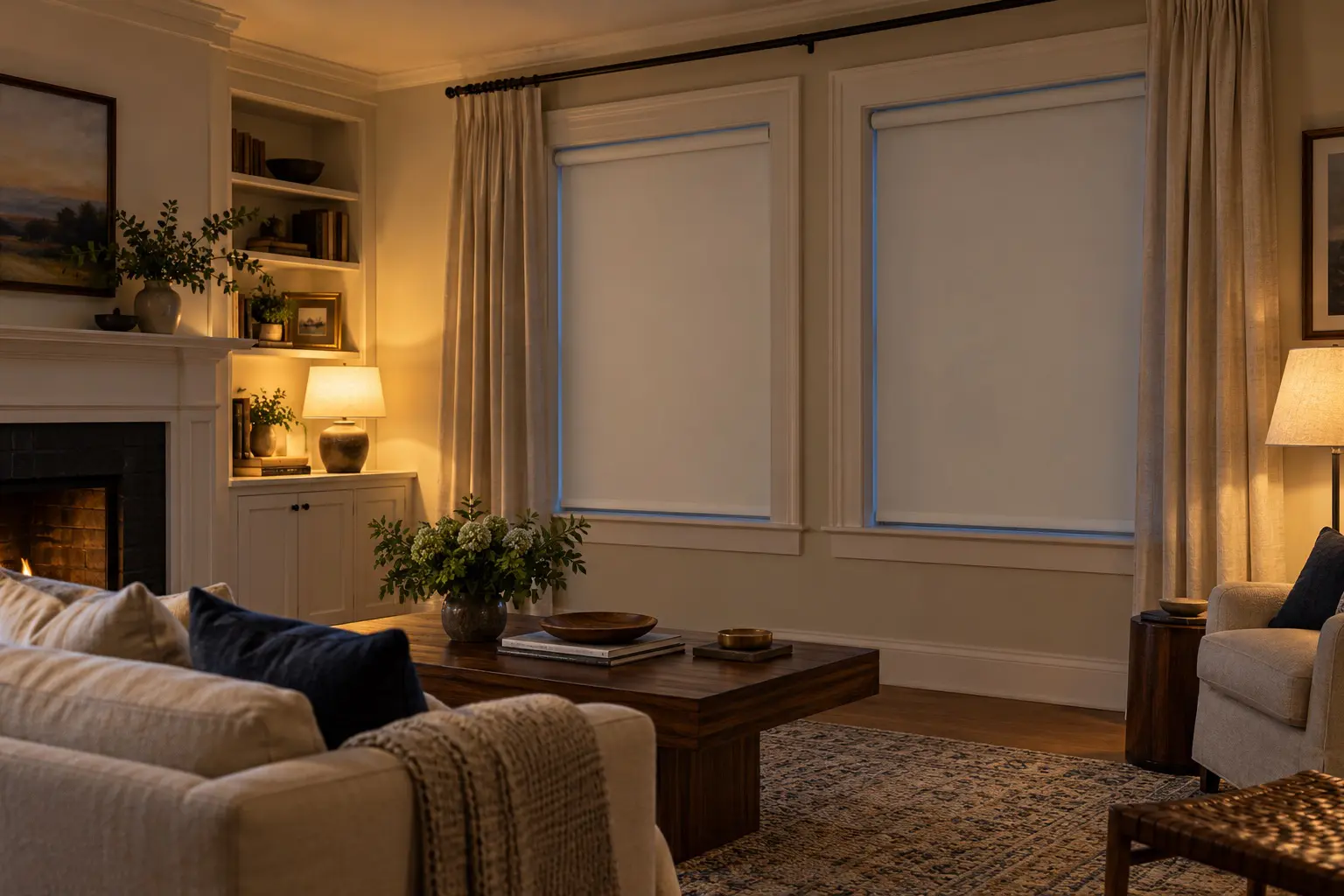
During daylight hours, the brighter outdoors can make it harder to see into a home. After dark, with lamps glowing inside, that balance changes. Depending on your window coverings, someone outside may be able to see silhouettes, movement, or details within the room.
Solar shades are an important example. Their open weave helps preserve an outdoor view, but that view-through fabric should not be relied on for nighttime privacy. Hunter Douglas explains this change in its guide to solar shades.
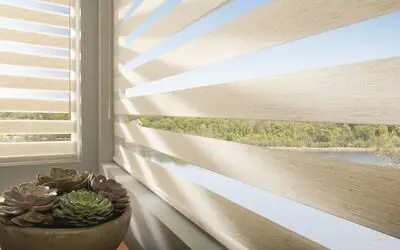
Sheer curtains can create a similar misunderstanding. They soften a window beautifully, but sheer fabric alone may leave more visible than you expect when the room is lit. Adjustable sheers and shadings offer additional ways to manage light; their evening performance depends on the particular design, fabric, and position.
You don’t have to give up the airy look you love. You need a plan for what happens when daylight fades.
Light filtering and nighttime privacy are different needs
“Light filtering” describes how a fabric handles light. It doesn’t, by itself, tell you exactly how much someone can see through it.
Some fabrics gently brighten a room while obscuring the view inside. Others may reveal shadows when a person stands close to the window. Fabric, lining, fit, and lighting all affect the result.
Room-darkening materials generally block more light, but the finished treatment matters too. Gaps around the edges can leave sightlines, even when the fabric itself is opaque.
Before choosing custom window shades, explain what privacy means to you. Do you want to soften the view from the sidewalk, keep evening activity out of sight, or feel comfortable getting dressed in a bedroom? Those expectations deserve different recommendations.
Three ways to welcome daylight and protect your evenings
1. Choose separate settings for day and night
A treatment with two fabric layers gives you more flexibility than asking one fabric to do everything.
You might use a sheer or light-filtering layer while reading over morning coffee, then lower a more opaque layer when the lamps come on. Certain Hunter Douglas Duolite® designs combine different fabric opacities within one treatment; configurations vary by product.
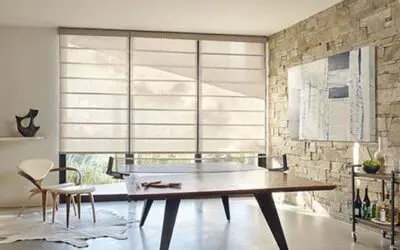
Whether you prefer the clean lines of roller shades or the softer appearance of Roman shades, ask which fabrics, linings, and dual-layer options suit your windows. The appearance is only part of the decision.
2. Pair shades with drapery that actually closes
If your current shades still suit your home, adding a second layer may be worth exploring.
Custom drapery can bring warmth, texture, and a finished look to a room while providing another way to manage privacy. Leave the panels open during the day, then draw them closed for the evening.
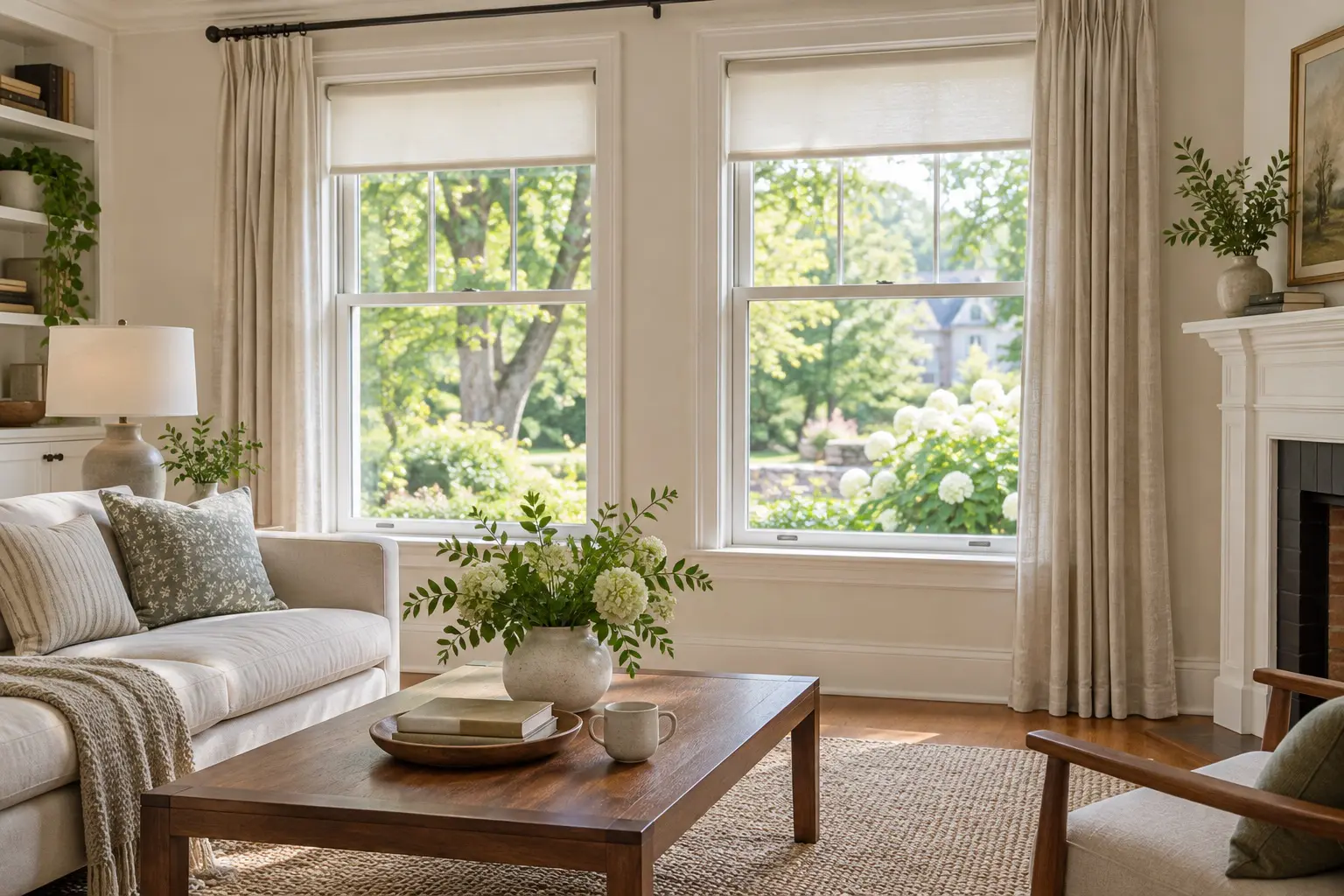
The details matter. Decorative side panels may look full enough to close but aren’t necessarily designed to cover the window. For privacy, discuss panels that draw across the entire opening, along with suitable fabric, lining, and overlap.
3. Consider where you need coverage—and where you want light
A street-facing room may need privacy across the lower part of a window while still benefiting from daylight above.
Available on select treatments, including certain honeycomb shades, a top-down/bottom-up design lets you adjust coverage from either direction.
Outside viewing angles still matter. An uncovered upper section may be visible from a taller building nearby, so the right arrangement depends on your home’s surroundings.
Start with the rooms where privacy matters most
You don’t need to make the same choice for every window.
Living rooms often need a balance between welcoming daylight and evening coverage, particularly when windows face a street.
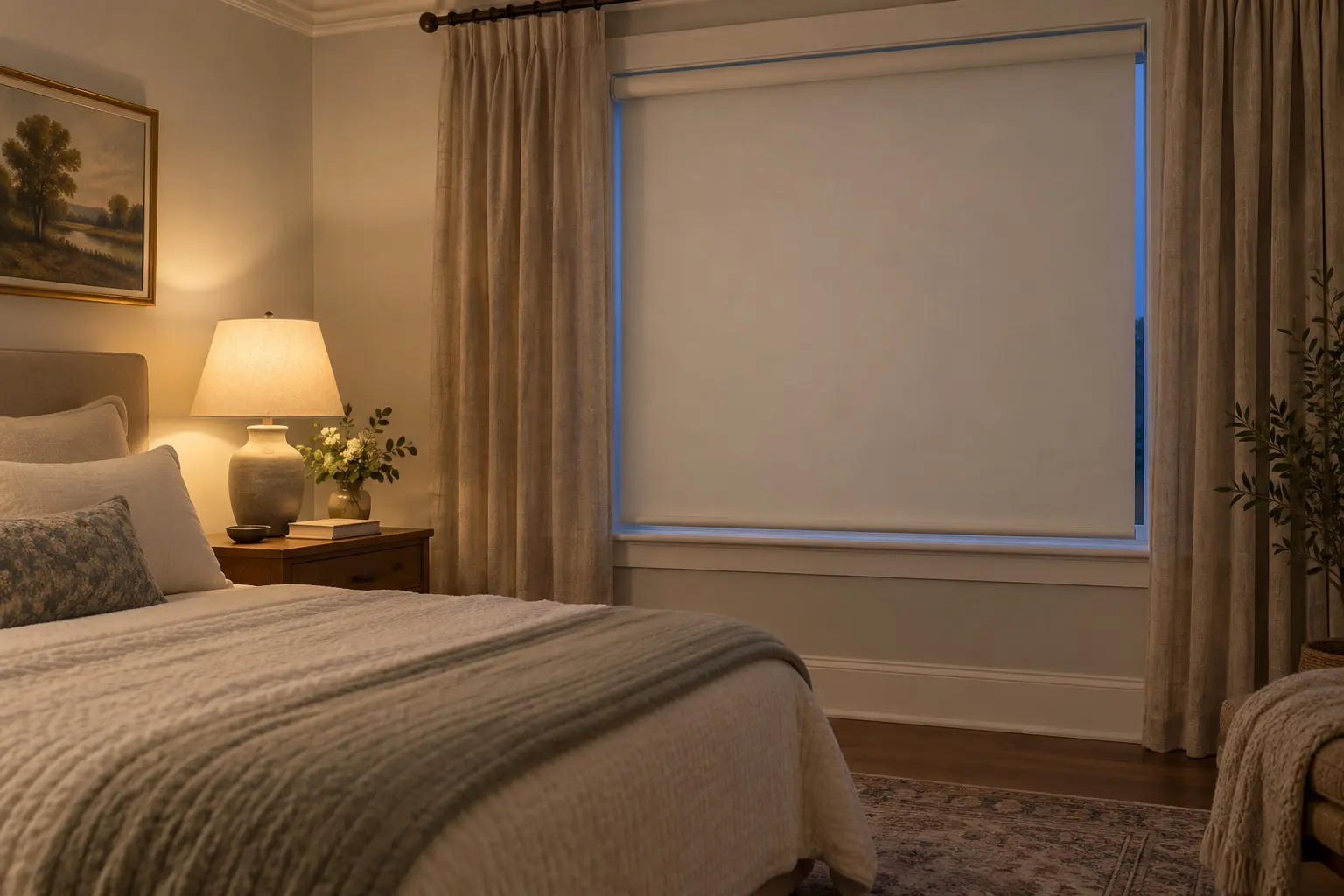
Bedrooms call for closer attention to both privacy and sleep preferences. Ask about fabric opacity, coverage at the edges, and whether an additional layer would help.
Bathrooms need privacy suited to their location, along with materials appropriate for moisture exposure.
Across Greater Boston, a ground-floor condo and a home overlooking a private yard can have very different needs. Start with the room where you feel least comfortable, then build a plan around how you live.
Make evening privacy easier to remember
There’s a familiar moment when dinner is underway, the phone rings, and closing the shades slips your mind.
Motorized window treatments can make that routine easier. With a compatible system and the appropriate setup, shades can be scheduled to close as part of your evening routine.
Automation moves the treatment; privacy still depends on the fabric and coverage. Paired thoughtfully, they can help your home feel ready for the evening without another task to remember.
Take a look from the other side of the window
If you’re unsure how your existing treatments perform, try a simple evening check.
With your usual indoor lights on and the shades closed, have someone you trust look from your own yard or another safe, permitted outdoor spot. Check whether they can see room details or movement, and notice any gaps.
That view can be revealing. It can also help you describe exactly what you’d like to change during a consultation.
Feel comfortable in your home, morning through night
You shouldn’t have to spend the evening wondering whether your living room feels more open to the neighborhood than you intended.
Lynne Greene Interiors helps Boston-area homeowners choose window treatments around their rooms, routines, and personal style. Visit our window treatment showroom to explore options, or let us help you consider them in your own home.
Whether you’re updating one exposed room or planning throughout your home, we’ll help you find a balance that feels right.
Schedule your free in-home window treatment consultation and tell us which room you’d most like to feel comfortable in after dark.